What Is a Monitored Fire Alarm System and Why Does Your Business Need One
Key Takeaways
- A monitored fire alarm system connects your building directly to a UL-listed central monitoring station that contacts emergency responders on your behalf.
- Unlike unmonitored systems, a monitored system acts even when no one is present to call 911.
- When an alarm triggers, a trained operator at the central station receives the signal and dispatches the local fire department automatically.
- NFPA 72 is the national standard that governs fire alarm system design, installation, and monitoring for commercial buildings.
- Florida law and local Authority Having Jurisdiction (AHJ) requirements mandate monitored fire alarm systems in most commercial occupancies across South Florida.
- Businesses without a properly monitored system face serious legal, financial, and safety risks.
What Is a Monitored Fire Alarm System
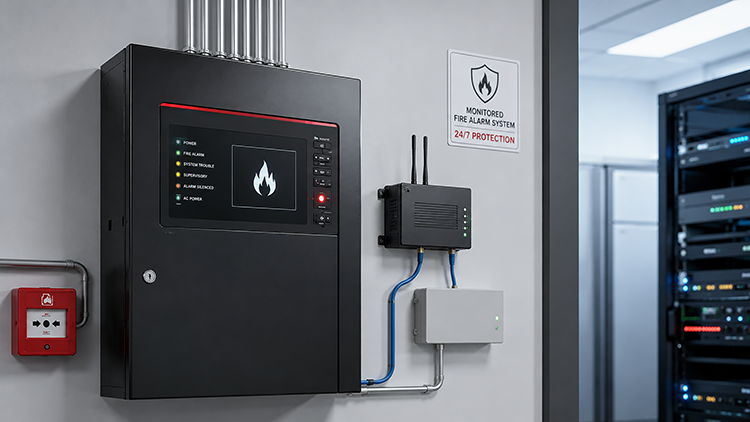
A monitored fire alarm system is a complete life safety solution that does more than sound a local alarm. It is a network of detectors, pull stations, control panels, and notification devices that are wired or wirelessly connected to a UL-listed central monitoring station operating 24 hours a day, 7 days a week.
When smoke, heat, or a manual pull station triggers the system, a signal travels in real time to that central station. Trained operators there immediately verify the alert and dispatch your local fire department, whether your building is occupied or empty at 3 a.m. That level of automatic response is what separates a monitored system from every other fire safety option on the market.
For South Florida business owners, this is a code-required standard for nearly every commercial building type in the region.
How Is It Different from an Unmonitored System
Understanding the difference between monitored and unmonitored fire alarm systems is critical before making any investment in your building’s safety.
An unmonitored system, sometimes called a local alarm, activates audible and visual alerts inside and outside the building when triggered. That is the full extent of its function. No signal is sent anywhere. If no one is nearby to hear the alarm and call 911, precious response time is lost.
A monitored fire alarm system eliminates that gap. Here is how the two compare side by side:
Unmonitored System:
- Triggers local horn and strobe alerts only
- Relies on someone nearby to call the fire department
- Does not protect unoccupied buildings after hours
- Typically does not satisfy commercial code requirements in Florida
- Offers no documentation of alarm events for insurance or compliance
Monitored Fire Alarm System:
- Sends an automatic signal to a UL-listed central station
- Central station operators dispatch fire services immediately
- Protects the building around the clock, even when empty
- Meets NFPA 72 and Florida Building Code requirements for commercial properties
- Provides full event logging and reporting for AHJ inspections and insurance purposes
For a warehouse in Stuart, a medical office in Palm City, or a retail center in Port St. Lucie, the difference between these two systems could be the difference between a contained incident and a total loss.
What Happens When a Monitored Fire Alarm Triggers
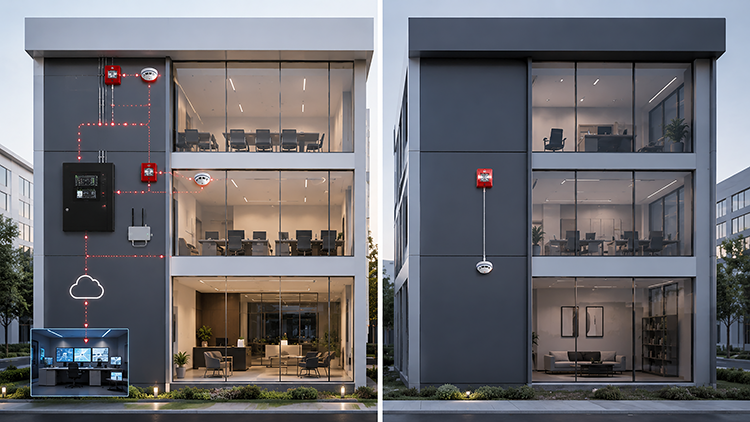
One of the most common questions business owners ask is exactly what occurs in those first seconds after an alarm activates. The process is precise and designed to move fast. Research published in ScienceDirect (2026) found that structural damage costs increase by approximately $3,000 per minute of delay in fire response, and that the probability of total loss from a fire rises exponentially after 11 minutes without suppression.
Here is the step-by-step sequence for a properly monitored commercial fire alarm system:
- Detection: A smoke detector, heat sensor, or manual pull station detects a threat and sends a signal to the fire alarm control panel.
- Panel activation: The control panel processes the signal and triggers audible and visual notifications inside the building to alert occupants.
- Signal transmission: Simultaneously, the panel transmits an alarm signal through a dedicated communication pathway to your UL-listed central monitoring station.
- Operator response: A trained monitoring operator receives the signal in seconds, reviews the account information, and attempts to contact the building’s designated contacts.
- Emergency dispatch: Without waiting for confirmation, the operator contacts the local fire department directly and provides the building address and alarm zone details.
- Follow-up communication: The monitoring station continues to manage communication between your contacts and emergency responders until the situation is resolved.
This entire sequence typically completes within seconds of the initial trigger. The speed of that automated response is why monitored systems save lives and significantly limit property damage.
Why Does the UL Listing on a Central Station Matter
Not all monitoring stations are created equal. The UL listing on a central monitoring station is not just a marketing badge. It represents certification by Underwriters Laboratories that the station meets rigorous standards for physical security, redundant power systems, trained personnel, documented procedures, and response protocols.
For commercial businesses in South Florida, there are two important reasons why the UL listing matters directly to you:
- Insurance requirements: Most commercial property insurers require alarm monitoring through a UL-listed central station as a condition of coverage. A non-listed station may invalidate claims in the event of a fire loss.
- Code compliance: Both NFPA 72 and Florida Building Code provisions reference UL-listed monitoring stations as the standard for commercial fire alarm supervision.
At Group One Safety and Security, our central station monitoring meets UL certification standards, so every alarm signal your system transmits is handled by an operation built to perform under pressure.
What Is NFPA 72 and Why Should South Florida Business Owners Care
NFPA 72 is the National Fire Alarm and Signaling Code, published by the National Fire Protection Association. It is the primary technical standard that governs how fire alarm systems must be designed, installed, tested, inspected, and monitored in the United States.
For South Florida business owners, NFPA 72 is not optional reading. It is the legal backbone of fire alarm compliance in Florida, enforced through the Florida Building Code and the Florida Fire
Prevention Code. Here is why it matters to your operation:
- Design standards: Your fire alarm system must be engineered to meet specific detector placement, notification coverage, and wiring requirements defined in NFPA 72.
- Installation requirements: Only licensed contractors may install systems under NFPA 72 guidelines in Florida (Group One holds Florida License No. EF 20000681 and FPC24-000188).
- Monitoring mandates: NFPA 72 requires that commercial fire alarm systems be monitored by a listed supervising station, meaning a UL-listed central monitoring station.
- Inspection frequency: NFPA 72 requires annual inspections by a licensed fire alarm contractor, with additional testing intervals for specific components.
- Documentation: Every inspection, test, and repair must be documented and available for your local AHJ review.
Violations of NFPA 72 can result in failed inspections, fines, loss of occupancy permits, and significant liability exposure if a fire occurs and the system is found to be non-compliant.
Is a Monitored Fire Alarm System Legally Required in South Florida
For the vast majority of commercial property owners in South Florida, the answer is yes.
The Florida Building Code (based on the International Building Code) and the Florida Fire Prevention Code (based on NFPA 101, the Life Safety Code) together mandate fire alarm systems with monitoring for most commercial occupancies.
Here is a general overview of building types that are required to have monitored systems in this region:
- Office buildings and mixed-use commercial spaces
- Healthcare facilities, medical offices, and assisted living facilities
- Hotels, motels, and short-term rental properties
- Schools, daycares, and educational buildings
- Warehouses and industrial facilities above specific square footage thresholds
- Restaurants and places of public assembly
- Multi-tenant retail centers and shopping plazas
South Florida’s local Authorities Having Jurisdiction (AHJ), including county and municipal fire marshals in Martin County, St. Lucie County, Palm Beach County, and Broward County, enforce these requirements during new construction, renovations, and annual fire safety inspections.
If your building undergoes a change in occupancy or a significant renovation, a new fire alarm system permit may be required even in older structures that were previously grandfathered.
Consulting with a licensed fire alarm contractor before beginning any building project is the best way to stay ahead of compliance requirements.
What Are the Real Risks of an Unmonitored or Non-Compliant System
Some business owners underestimate the consequences of operating without a properly monitored fire alarm system. Here is a clear picture of what is at stake:
Financial and legal liability:
- Fines from your local fire marshal or AHJ for code violations
- Risk of failed occupancy inspections that close your business temporarily
- Potential voiding of your commercial property insurance policy in a claim situation
- Personal liability exposure if occupants are injured in a fire where code-required monitoring was absent
Operational risks:
- A fire that starts after hours with no one present goes unreported until someone notices
- Delayed response leads to greater structural damage, longer business interruption, and higher recovery costs
- According to the U.S. Fire Administration, fires in unsprinklered or unmonitored commercial buildings cause significantly higher property losses per incident than protected buildings
Reputation and continuity:
- A major fire loss can end a business permanently
- South Florida’s dense commercial market means insurance premiums and replacement costs are among the highest in the state
The cost of a monitored fire alarm system, installed and maintained by licensed professionals, is a fraction of the financial exposure that comes with being unprotected.
How Do You Know If Your Current System Is Code-Compliant
Many South Florida business owners inherit fire alarm systems when they purchase or lease commercial space. An existing system does not automatically mean a compliant one. Here are the key questions to ask:
- Is the system currently connected to a UL-listed central monitoring station?
- Has the system been inspected and tested within the last 12 months by a licensed contractor?
- Are there current inspection reports on file for your AHJ?
- Does the system meet the NFPA 72 edition currently adopted by your local jurisdiction?
- Have any detectors, panels, or communication devices been replaced or updated within the manufacturer’s recommended service life?
If you cannot answer “yes” to all of these questions, a professional assessment is your next step. At Group One Safety and Security, we offer thorough fire alarm system evaluations for commercial properties throughout South Florida, so you know exactly where you stand before an inspection catches you off guard.
Final Takeaways
- A monitored fire alarm system is a legally required, life-saving investment for commercial buildings in South Florida.
- The key advantage over an unmonitored system is automatic emergency dispatch through a UL-listed central station, regardless of whether anyone is on-site.
- NFPA 72 sets the technical standards for design, installation, testing, and monitoring, and Florida law requires compliance in most commercial occupancies.
- Failing to maintain a compliant, monitored system exposes your business to fines, insurance issues, and serious liability in the event of a fire.
- Annual inspections and proper documentation are required to stay compliant with your local AHJ in Martin County, St. Lucie County, and the greater South Florida area.
When your business demands real protection backed by decades of expertise and full code compliance, Group One Safety and Security is the trusted name South Florida businesses have relied on since 1984.
Frequently Asked Questions
What is the difference between a monitored and an unmonitored fire alarm system?
An unmonitored system only triggers local alarms and depends on someone present to call 911. A monitored system transmits an automatic signal to a UL-listed central station, where trained operators dispatch emergency responders immediately, even if your building is empty.
Does my commercial building in South Florida legally require a monitored fire alarm system?
Yes, in most cases. The Florida Building Code and Florida Fire Prevention Code require monitored fire alarm systems for most commercial occupancies. Your local fire marshal enforces these requirements, and non-compliance can result in fines, failed inspections, or loss of occupancy permits.
What does NFPA 72 compliance mean for my business?
NFPA 72 is the national standard for fire alarm systems. Compliance means your system was designed, installed, monitored, and inspected according to specific technical and safety requirements. Florida has adopted NFPA 72 as the governing standard, and your local AHJ uses it as the basis for all commercial fire alarm inspections.
What happens at the central monitoring station when my alarm triggers?
A trained operator receives your alarm signal in seconds, reviews your account information, and dispatches your local fire department without waiting for confirmation. The operator also contacts your designated building representatives and manages communication until the situation is resolved.
Can I keep my existing fire alarm system, or does it need to be replaced?
It depends on the system’s age, current condition, and whether it meets the NFPA 72 edition adopted in your jurisdiction. Some older systems can be upgraded with new monitoring communication devices or additional detectors to bring them into compliance. A licensed inspection will tell you what is needed.
Protecting the Treasure Coast since 1984
Talk to a local, licensed team, not a call center. Get a free assessment and a written quote.