Access Control and CCTV: Securing Doors, Gates, and Campuses in Stuart, FL
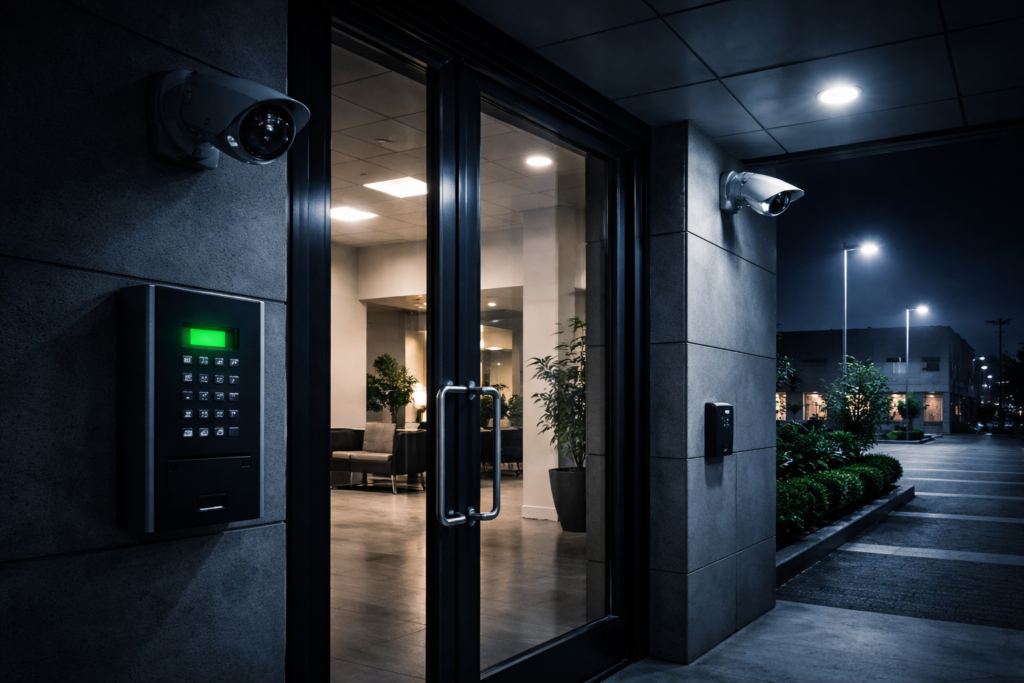
Keys Are No Longer Enough
For decades, physical keys were the standard for controlling access to commercial buildings. Offices handed keys to employees, facility managers tracked spare copies, and doors were secured with traditional locks. But in today’s environment, keys alone no longer provide sufficient protection.
A lost key cannot be remotely disabled. A copied key leaves no audit trail. When employees leave a company or contractors complete a project, there is often no way to know who still has access to a facility. For businesses across Stuart and Martin County, this lack of visibility creates real security exposure.
Modern facilities rely on two core systems to manage physical security effectively: access control systems and video surveillance.
Access control systems regulate who can enter specific doors, buildings, or areas. CCTV and video surveillance provide visual confirmation and monitoring of activity across a facility. Together, these systems provide both control and accountability.
Businesses throughout Stuart—from medical offices and office complexes to HOAs and industrial facilities—are increasingly turning to these technologies to improve security and operational awareness.
Local providers such as Group One Safety & Security help businesses design and install integrated security systems that protect people, property, and sensitive areas while remaining easy to manage.
Common Security Vulnerabilities Businesses Face
Many commercial buildings unknowingly operate with security gaps that expose them to theft, unauthorized access, or liability risks.
Some of the most common vulnerabilities include:
Lost or copied keys
Traditional locks provide no way to track who has access to a facility once keys are distributed.
After-hours entry with no visibility
If someone enters a building outside business hours, there may be no record of when the entry occurred.
Camera blind spots
Critical areas such as loading docks, stairwells, rear doors, and parking areas are often unmonitored.
Disconnected security systems
Cameras, alarms, and access control sometimes operate on separate platforms with no integration.
Manual visitor sign-in procedures
Paper logs provide little verification and no reliable audit trail.
Security professionals recommend layered protection strategies that combine controlled access with surveillance monitoring. Organizations such as the SBA, emphasizing credential management and activity tracking.
Access Control: Who Gets In, When, and Where
Access control systems allow businesses to manage building entry through digital credentials rather than physical keys. Instead of relying on traditional locks, doors are equipped with electronic readers that grant access only to authorized individuals.
Businesses seeking access control systems in Stuart FL often choose from several credential technologies depending on their operational needs.
Technology Options
Proximity card and key fob readers
These systems remain the most widely used option in commercial facilities. Employees simply present a credential to the reader to unlock the door.
Keypad and PIN entry systems
PIN-based entry systems are useful for lower traffic doors or controlled storage areas.
Mobile credential access
Some modern systems allow employees to unlock doors using secure smartphone credentials.
Each of these technologies allows administrators to manage credentials digitally, eliminating the need to replace locks when employees leave or keys are lost.
System Capabilities
Access control systems provide several advantages beyond simply unlocking doors.
Time-based access rules
Administrators can limit access to specific hours, shifts, or schedules.
Credential management
New employees can be granted access instantly, while former employees can be removed from the system immediately.
Access logs and audit trails
Every entry event is recorded, creating a complete log that can be used for investigations, compliance reviews, or HR matters.
Multi-building management
Facilities with multiple entrances or campuses can control all doors from a centralized system.
Ideal Facilities for Access Control
Access control systems are especially valuable in environments that require controlled entry and visibility.
Examples include:
Medical and dental offices
Healthcare facilities must protect patient information and sensitive areas.
Schools and childcare facilities
Controlled entry prevents unauthorized visitors from entering buildings.
HOAs and gated communities
Residents and guests can be granted controlled access to gates, amenities, and shared spaces.
Offices with restricted areas
Server rooms, financial departments, or executive suites often require additional access restrictions.
CCTV and Video Surveillance: See Everything, Miss Nothing
While access control systems regulate entry, video surveillance provides visual monitoring of a facility’s activities.
Modern commercial CCTV systems in Stuart rely on IP-based cameras that provide high-resolution video and advanced analytics capabilities.
Camera Technology
Security camera systems can include multiple camera types depending on coverage requirements.
High-definition IP cameras
Modern cameras range from 4MP to 12MP resolution, providing clear images for facial recognition and license plate visibility.
Indoor dome cameras
These cameras are commonly used in hallways, lobbies, and offices.
Outdoor bullet cameras
Bullet cameras provide weather-resistant monitoring for parking lots and building perimeters.
PTZ cameras (pan, tilt, zoom)
These cameras allow operators to remotely control the camera direction and zoom level for wide-area monitoring.
Some facilities also install license plate recognition (LPR) cameras to monitor vehicle activity in parking lots or gated entrances.
Industry guidance from ASIS, including proper camera placement and data retention strategies.
Remote Viewing and Storage
Modern CCTV systems allow business owners or facility managers to monitor their buildings from anywhere.
Key capabilities include:
Secure remote access
Live or recorded video can be viewed via smartphone, tablet, or desktop computer.
Network video recorders (NVRs)
Footage can be stored locally with customizable retention schedules.
Cloud backup options
Some facilities choose cloud storage for additional redundancy and disaster protection.
Business Benefits of Video Surveillance
Video surveillance provides several operational advantages beyond basic security.
Incident documentation
Recorded video provides evidence for investigations, insurance claims, or liability disputes.
Employee safety
Visible cameras deter workplace incidents and allow quicker response during emergencies.
Operational awareness
Managers can monitor deliveries, parking areas, or after-hours activity.
Integrated camera systems are commonly deployed alongside broader security that combine alarms, monitoring, and access control.
Integrated Systems: The Power of One Connected Platform
When access control and surveillance operate together, security becomes far more effective.
Integrated platforms allow security teams to view camera footage linked directly to entry events. For example, when an employee badge unlocks a door, administrators can immediately view the video recording associated with that entry.
Other integration benefits include:
- Alarm events automatically trigger camera recording
- Unified monitoring dashboards for security teams
- Elevator communication systems tied into building security infrastructure
- Simplified maintenance and service through a single provider
Working with a single security partner also improves reliability and support. Businesses benefit from consistent installation standards, coordinated maintenance, and faster service when issues arise.
Smarter Security Starts at the Door
Access control and video surveillance have become foundational tools for modern facility security. These systems allow businesses to manage entry, monitor activity, and maintain a clear record of who enters their buildings.
For organizations in Stuart and Martin County, investing in the right technology can significantly reduce security risks while improving operational awareness.
Group One Safety & Security designs and installs integrated security solutions for businesses across South Florida, providing local expertise and ongoing support for access control, surveillance, and monitoring systems.
If your facility relies solely on keys or outdated cameras, it may be time to evaluate your current security strategy.
Businesses can request a professional assessment to identify opportunities for improved protection and system integration.
To understand how access control and surveillance fit into a broader life safety strategy, see our full commercial security service offering in the guide: Comprehensive Life Safety & Security Solutions for Stuart Businesses.