Fire Alarm System Remote Monitoring: How It Works and Why It Matters for Your South Florida Home
Key Takeaways
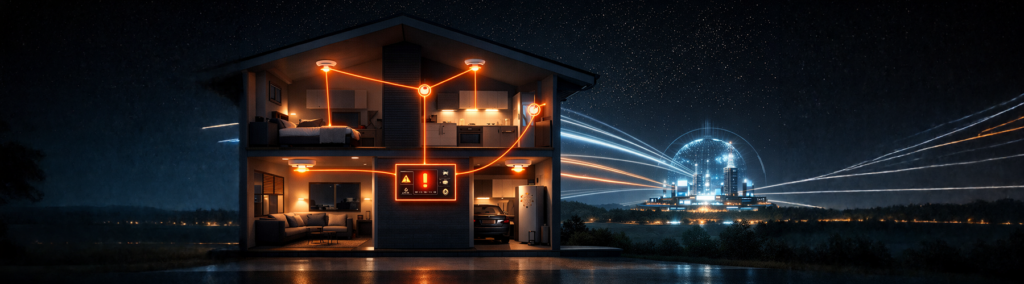
- Remote fire monitoring connects your home’s fire detection system to a 24/7 UL-listed monitoring center, ensuring professional responders are alerted instantly when smoke, heat, or carbon monoxide is detected.
- Real-time mobile alerts notify you immediately of any fire alarm trigger, giving you critical seconds to evacuate and allowing you to confirm the emergency from anywhere in the world.
- South Florida’s heat, humidity, and coastal weather increase fire risk, making professional monitoring and regular system maintenance more important than battery-operated smoke alarms alone.
- Group One’s remote monitoring integrates with smart home systems, allowing automated responses like unlocking smart locks for safe evacuation and triggering lighting in dark areas.
- Professional monitoring eliminates human error and delays, ensuring emergency services arrive within critical time windows, potentially saving lives and limiting property damage.
How Does Fire Alarm System Remote Monitoring Actually Work
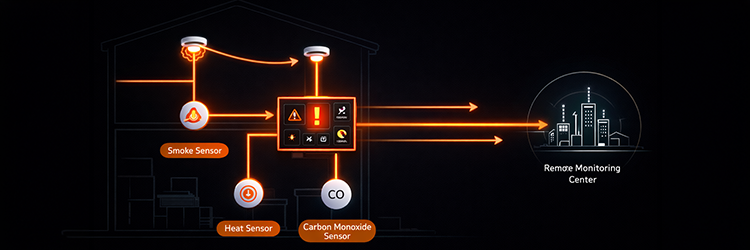
When most people think of fire safety, they picture a simple smoke detector on a wall. In reality, a remotely monitored fire alarm system is much more advanced. It’s a connected network of sensors, control panels, and professional monitoring that works continuously.
Here’s how it works: A home’s fire detection system, including smoke detectors, heat sensors, and carbon monoxide detectors, is connected, either through wiring or wireless signals, to a central control panel. That panel communicates with a 24/7 monitoring center using secure channels such as a phone line, broadband, or cellular backup.
When a sensor detects smoke, heat, or unsafe carbon monoxide levels, it sends a signal to the control panel. The panel immediately forwards this alert to the monitoring center, where a trained operator receives it within seconds and begins the response process.
The operator attempts to contact you or your emergency contacts to verify the situation. If there is no response, or if an emergency is confirmed, fire, police, or medical services are dispatched right away.
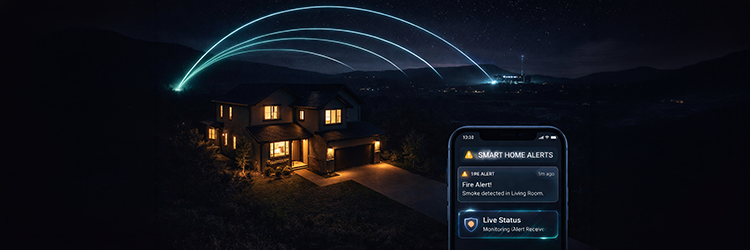
At the same time, you receive real-time alerts on your smartphone through a secure mobile app, so you know exactly what’s happening. This combination of professional monitoring and instant notifications helps provide valuable time to respond and evacuate safely if needed.
How Remote Monitoring Integrates with Your Smart Home
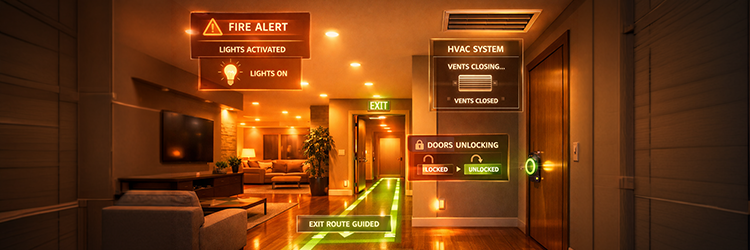
Modern fire alarm systems are no longer isolated. They can be designed with remote monitoring capabilities that integrate seamlessly with your smart home ecosystem.
When a fire alarm is triggered, your system can automatically:
- Unlock smart locks to ensure you can evacuate quickly without fumbling for keys
- Activate all lights and hallway strobes to illuminate safe exit routes, even in heavy smoke
- Turn off HVAC systems to reduce smoke spread throughout the home
- Lower smart thermostats to reduce fire spread
- Send alerts to family members’ phones so everyone knows to evacuate immediately
- Log the incident with timestamps for insurance claims and fire department records
This automation isn’t just convenient, it can save lives. In a real fire, a confused or panicked evacuation can cause injuries. Automated responses guide your family to safety and remove decisions from moments that should be about escape.
Installing Remote Fire Monitoring in an Existing Home
Many South Florida homeowners ask: “Do I need to replace my entire system to add remote monitoring?”
The answer depends on your current setup. If you have a modern fire alarm control panel, monitoring can often be added without replacing the entire system. Your existing equipment is evaluated, components are upgraded if needed, and the panel is connected to a monitoring center.
For older homes with only battery-operated smoke detectors, a new interconnected system can be designed. This typically includes a mix of hardwired and wireless sensors, a control panel, and professional monitoring, all installed to meet current safety standards and local building code requirements.
The installation usually takes a single day and involves minimal disruption to your home. Technicians test everything before completion to ensure the system is fully operational and properly connected to the monitoring service.
How Remote Monitoring Handles False Alarms and System Malfunctions
False alarms can be frustrating, but they also serve a purpose by testing your system and the monitoring response.
When a smoke detector is triggered by cooking, steam, or dust, the monitoring center will attempt to contact you. If you answer and confirm it’s a false alarm, the emergency dispatch is canceled. If there’s no response, it is treated as a potential emergency and fire services are dispatched. This is why it’s important to keep your contact details updated and respond quickly to calls from the monitoring center.
If the same sensor repeatedly triggers false alarms, for example, a smoke detector near the kitchen, it may indicate that the device is not ideally placed. In such cases, the detector can be repositioned, replaced with a heat sensor, or adjusted for sensitivity. This helps reduce nuisance alarms while maintaining safety.
System issues like low batteries, communication failures, or wiring problems are also detected and reported. The monitoring center notifies you about maintenance needs early, helping ensure your system remains fully operational.
Testing and Maintenance: Keeping Your System Fire-Ready
Professional monitoring is only effective when the system is functioning properly, which is why regular testing and maintenance are essential.
Monthly self-tests are recommended, either through your app or by using the test button on your control panel. In addition, professional inspections should be carried out at least once a year. These inspections typically include:
- Testing all smoke detectors and heat sensors
- Verifying communication with the monitoring center
- Checking backup battery power supplies
- Inspecting wiring for any damage
- Replacing sensors that have exceeded their effective lifespan
- Updating alarm system records as required by local authorities
Following a consistent maintenance schedule helps ensure your system remains reliable. It also allows you to stay ahead of any issues, so your connection to emergency response is always active when you need it.
Is Remote Fire Monitoring Required in South Florida
Florida law requires all residential homes to have functioning smoke detectors. The specific requirements depend on when your home was built and local ordinances.
In newer construction, interconnected smoke alarms are standard, and studies from the National Fire Protection Association show they can reduce the risk of fire-related deaths by up to 50% by ensuring all alarms sound simultaneously throughout the home.
While remote monitoring isn’t universally mandated for residential homes, it’s increasingly common in:
- HOA communities (many HOAs require monitored systems)
- New construction or major renovations
- Homes built in flood zones or fire-prone areas
- Properties with wood shake roofs or other high-risk features
- Homes seeking to comply with insurance company requirements
Even where not required, South Florida fire marshals and insurance providers strongly recommend professional monitoring for any home with occupants who may have difficulty evacuating (elderly, disabled, or very young family members).
Final Takeaways: Remote Fire Monitoring as Peace of Mind
Remote fire monitoring transforms fire safety from a reactive measure (hoping you detect a fire quickly) into a proactive, professional response system that works even when you can’t.
In South Florida’s high-heat, high-humidity climate, with electrical hazards unique to coastal living and the lightning risk that comes with daily summer thunderstorms, professional fire monitoring is a practical necessity for homeowners who take their family’s safety seriously.
Group One’s remote monitoring ensures that whether you’re asleep in your bedroom, stuck in traffic on I-95, or vacationing out of state, your home has trained professionals watching for danger 24/7. When trouble strikes, you don’t call for help, we do. And we do it in seconds, helping ensure emergency responders are dispatched quickly, improving the chances of controlling a fire before it escalates.
Combined with modern smart home integration, regular system maintenance, and the insurance savings that often accompany monitored fire systems, remote monitoring is one of the most valuable investments South Florida homeowners can make for their family’s safety and their property’s protection. Group One Safety & Security brings four decades of experience protecting South Florida homes and the peace of mind that comes from knowing trained professionals are always watching out for what matters most.