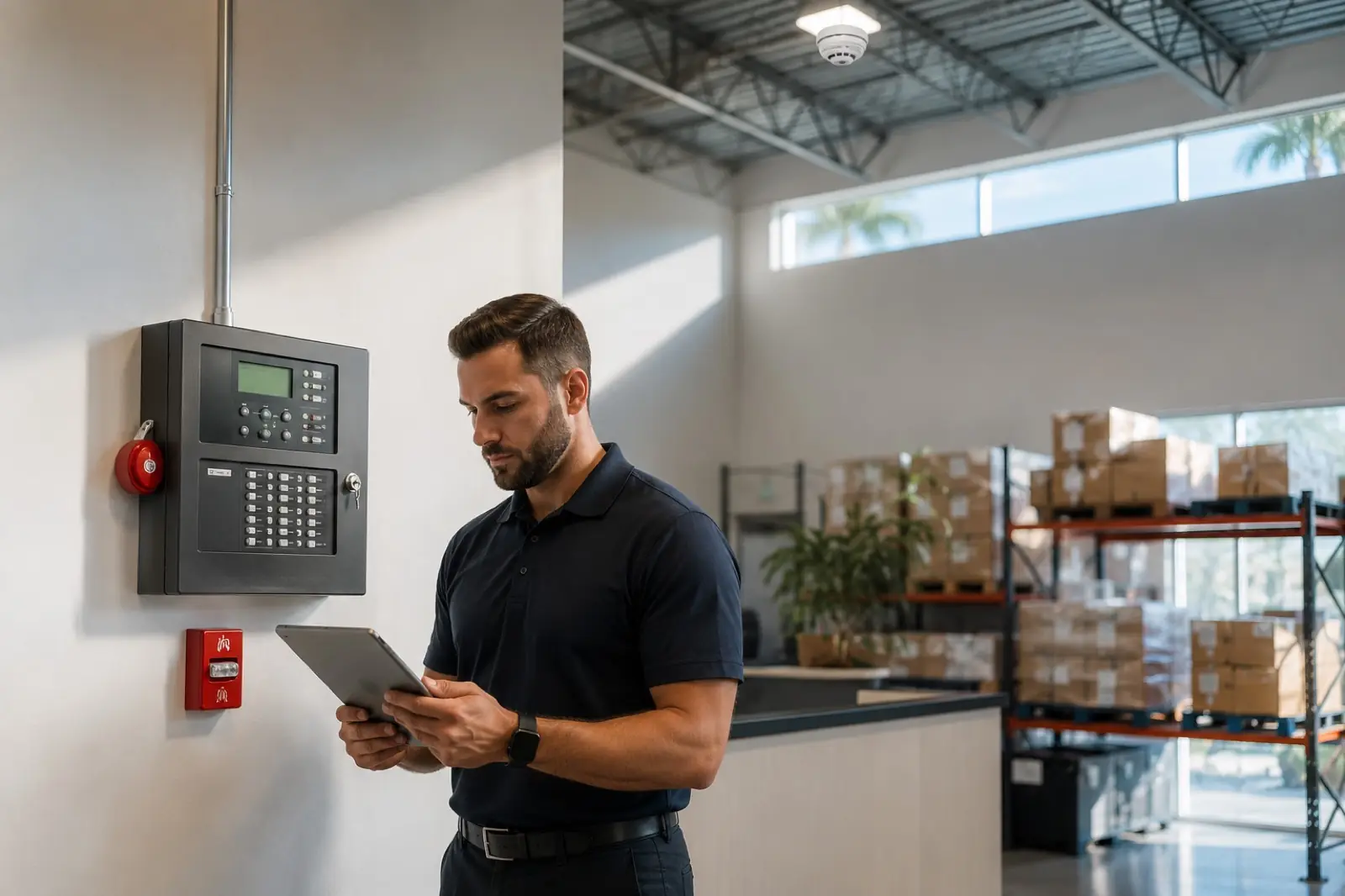
What a Group One fire alarm system includes
Every system is designed to your building's occupancy and code requirements. A typical installation includes:
Fire protection engineered to code
Design through inspection, handled by one licensed local team.
Code-Compliant Design
Systems engineered to NFPA 72 and Martin County's Authority Having Jurisdiction for your occupancy type.
Detection & Notification
Smoke, heat, and duct detectors with the horns, strobes, and pull stations your building requires.
24/7 UL-Listed Monitoring
Verified fire signals dispatched to the fire department the moment they come in.
Sprinkler Monitoring
Flow, tamper, and pressure switches tied into the panel and reported immediately.
Inspection & Documentation
Testing and reports that satisfy your inspector and insurer, on schedule.
Backup Communication
Cellular and battery backup so the system reports through power and phone-line outages.
Where commercial fire alarms are required
We design and document systems for the occupancy you operate.
Medical & Healthcare
Higher-occupancy code requirements and frequent testing handled and documented.
Retail & Restaurants
Detection and notification sized to your floor plan and occupancy.
Offices & Professional
Code-compliant systems for single and multi-story buildings.
Multi-Tenant Buildings
Shared systems and per-tenant coverage with single-source management.
HOAs & Amenity Centers
Clubhouses and common areas that fall under commercial fire code.
Warehouses & Industrial
Detection sized for larger square footage and higher ceilings.
How we handle your fire alarm project
Free Consultation
We talk through your facility and what needs protecting. No sales script.
Site Assessment
We walk the property, map the risk areas, and note what integrates with your existing systems.
System Design
A design matched to your facility, budget, and code requirements.
Professional Installation
Our licensed, local technicians install everything themselves. We do not subcontract.
Testing & Training
We test every device and train your team before we leave.
Ongoing Service & Monitoring
Connected to our 24/7 UL-listed center, with local service whenever you need it.
Why Treasure Coast businesses choose Group One
40+ Years of Local Experience
Founded in 1984 and working in Martin County ever since. We know the local codes and buildings.
Locally Owned & Operated
Headquartered in Stuart. Your call reaches our team, not an out-of-state call center.
One Company, Every System
Fire, intrusion, cameras, access, and monitoring under one roof and one point of contact.
UL-Listed Monitoring
Our 24/7 UL-listed monitoring meets the highest industry standards. Trained dispatchers, not a voicemail.
A+ BBB Rating
Earned through honesty, transparency, and follow-through with every client.
Florida Licensed
Lic. EF 20000681 (Electronic Systems) and FPC24-000188 (Fire Protection), member of the Integration Association of Florida.
No Subcontractors
Every technician is a Group One employee, trained on our systems and accountable to you.
Long-Term Relationships
Some clients have been with us for 20, 30, even 38 years.
Commercial fire alarm questions
How often does Florida require inspection?
NFPA 72 generally requires annual inspection for most commercial systems, with quarterly testing for some higher-occupancy and healthcare buildings. We confirm your schedule and keep you on it.
Do you handle the design and permitting?
Yes. We design to NFPA 72 and your local AHJ, and provide the documentation the inspector and your insurer require.
Can you monitor the fire alarm too?
Yes. Our UL-listed monitoring team dispatches the fire department the moment a verified signal comes in.
Can you tie in our sprinkler system?
Yes. We monitor flow, tamper, and pressure switches as part of the fire alarm panel.
Can you take over an existing fire alarm system?
Often, yes. We evaluate the equipment and inspection history, then monitor, upgrade to code, or replace it.
What backup does the system have?
Battery and cellular backup keep the system reporting through power and phone-line outages.
Related commercial services
Fire Alarm Inspection & Testing
Scheduled NFPA 72 testing and documentation that keeps you compliant.
Learn More →Fire Sprinkler Inspection & Testing
Flow testing, backflow certification, and sprinkler monitoring.
Learn More →Get your building code-compliant and covered
Ask for a fire alarm assessment or quote, from a local team licensed for fire protection (FPC24-000188) that has served Martin County since 1984.