What Happens When Someone Presses the Elevator Emergency Phone?
Key Takeaways
- Pressing the elevator emergency phone starts a code-timed sequence: the call must be acknowledged by authorized personnel within 45 seconds under ASME A17.1, or it has to reroute automatically.
Most building owners in Stuart and across South Florida have never actually watched what happens after someone presses that little phone icon inside an elevator car. It looks simple: push a button, talk to someone, get help. In reality, that button triggers a legally timed chain of events involving a monitoring center, a trained operator, and, in some cases, 911.
Group One Safety & Security built its elevator monitoring service around that exact chain, because when it breaks down anywhere along the way, the result is a code violation at best and a stranded, panicked passenger at worst.
This article walks through that sequence second by second, so you can see exactly where your current elevator phone setup might be falling short, and what a properly monitored system actually looks like in practice.
What Happens the Instant the Button Is Pressed?
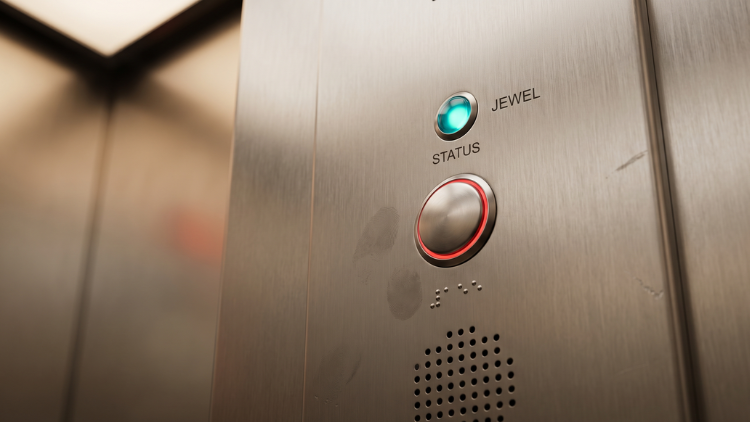
The moment a passenger presses the “HELP” button, the car’s communication device places a direct call. Under ASME A17.1, this must be a genuine two-way voice connection, not a text message, an app alert, or a simple alarm bell. Handsets and closed compartments are prohibited, since anything that can be pulled or blocked works against a passenger in a real emergency.
At the same time, a labeled visual indicator (an LED or lighted “jewel”) lights up on the car panel to confirm the call went through. This isn’t optional. It exists specifically for passengers who are deaf or hard of hearing, so they know contact has been made even before anyone speaks.
Who Answers the Call, and How Fast?
This is where the 45-second rule comes in. ASME A17.1 requires that the call reach a location staffed by authorized personnel who can actually take action. If the emergency call is not acknowledged within 45 seconds, it must automatically divert to an alternate location.
For buildings using Group One, that primary destination is a UL-listed monitoring center staffed around the clock. A trained operator answers, which means the clock never runs out on a call that’s routed correctly in the first place.
A few things determine whether that 45-second window is met reliably:
- Whether the phone line (landline, cellular, or VoIP) is actually working that day
- Whether the monitoring center has enough staff on duty at 2 a.m., not just 2 p.m.
- Whether the system has a tested backup path if the primary connection fails
What Does the Operator Actually Do During the Call?
Once connected, the operator’s job isn’t just to say “help is coming.” They need to determine what’s actually happening inside that car, because the response looks different for a mechanical stoppage than it does for a medical emergency.
A trained operator will typically:
- Confirm the passenger’s condition and whether anyone is injured
- Confirm the building, elevator number, and floor so the right responder is sent to the right place
- Keep the passenger talking and calm while dispatch is arranged
- Activate the acknowledgment signal so the passenger knows they haven’t been forgotten
This step matters more than it might seem. Industry data from the National Elevator Industry, Inc. shows that between 95% and 98% of elevator phone activations are non-entrapments.
An operator who can’t verify the situation through real conversation ends up either sending emergency crews to nothing or, worse, dismissing a genuine entrapment.
Who Gets Dispatched, and How Is That Decision Made?
Not every elevator call needs a fire truck. Based on what the operator learns, dispatch typically follows one of three paths:
- Building staff or property management, for routine stoppages where the passenger is safe and just needs the doors opened
- An elevator technician, when the issue looks mechanical (a stuck door sensor, a power blip, a stalled car)
- 911 and emergency responders, for any medical concern, prolonged entrapment, or situation the operator can’t resolve through building contacts alone
Group One logs each of these calls in detail, which supports the building’s compliance records and inspection history.
What Happens If the Call Goes Unanswered or the Line Fails?
An unanswered elevator call isn’t a minor glitch. It’s a code violation, and depending on how long the passenger was left without contact, it can become a serious liability issue for the building owner.
Common failure points include:
- An analog phone line that’s been quietly disconnected during a carrier upgrade
- A monitoring service that isn’t actually staffed at the moment the call comes in
- No backup path if the primary line drops during a storm or power outage (a real concern in South Florida)
This is why redundancy matters as much as the initial connection. Group One builds cellular and VoIP backup paths into its monitored systems and runs routine automated test signals, so a failure gets caught during a scheduled check, not during an actual entrapment.
Why Isn’t a Basic Intercom or Unmonitored Line Enough?
A do-it-yourself intercom or an unmonitored phone line might technically let a passenger speak to someone. What it usually can’t do is guarantee the things the code actually requires: a documented 45-second answer window, 24/7 staffing by people trained to assess the situation, automatic failover if the line drops, and a written call log an inspector can review.
Buildings that rely on an unmonitored line or a phone that dials a front-desk cell number are often passing inspection today only because nobody has tested it during a real emergency yet. That’s a gap, not a safety plan.
How Does Group One Keep Your Building Actually Compliant?
Group One Safety & Security has served South Florida homes and businesses since 1984, and elevator monitoring is built directly into that same life safety framework the company already provides for fire alarms and security systems. For commercial buildings, condos, HOAs, and mixed-use properties across the region, that means:
- Two-way voice communication built to meet applicable ASME A17.1 requirements and accessibility requirements
- Redundant cellular and VoIP backup paths in case a primary line fails
- Detailed call logs for compliance records and inspections
- The option to bundle elevator monitoring with fire alarm and security monitoring under one service agreement
For a Stuart or South Florida property manager, that’s one less system to worry about failing quietly in the background.
Final Takeaways
Every elevator emergency call sets off the same sequence: a two-way connection, a 45-second answer window, a trained operator making a real assessment, and a dispatch decision based on what’s actually happening in that car. ASME A17.1, ADA Standards, and the Florida Building Code all point to the same conclusion: an unmonitored line or a basic intercom simply can’t guarantee that sequence holds up when it matters.
For building owners across Stuart and South Florida, the safer, more reliable path is a professionally monitored system built for exactly this purpose, and that’s the standard Group One Safety & Security shows up with every single day.
Frequently Asked Questions
How fast does an elevator emergency call legally need to be answered?
Under ASME A17.1, which Florida has adopted into its Building Code, the call must reach authorized personnel within 45 seconds. If it isn’t acknowledged in that window, it has to automatically reroute to a backup location.
What happens if my building’s elevator phone still runs on an old landline?
As carriers retire copper phone lines, elevator systems still wired to an old analog connection risk losing their emergency call path entirely. Many buildings are migrating to cellular or VoIP-based communicators specifically to keep that connection reliable and code-compliant.
What’s the real difference between an old alarm bell and monitored two-way phone service?
An alarm bell just makes noise near the elevator and hopes someone hears it. A monitored phone connects the passenger directly to a trained operator who can verify the emergency, keep them calm, and dispatch the right kind of help.
Protecting the Treasure Coast since 1984
Talk to a local, licensed team, not a call center. Get a free assessment and a written quote.