Remote CCTV Monitoring for Businesses: How It Works
Key Takeaways
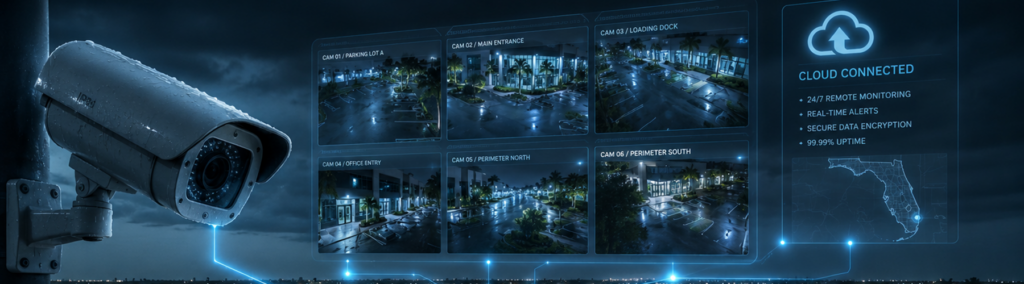
- Remote CCTV monitoring lets business owners view live and recorded footage from any device, at any time, without being on-site.
- Modern commercial surveillance systems use IP-based cameras, cloud or NVR storage, and encrypted connections to deliver real-time video access.
- Businesses in South Florida, including retail stores, warehouses, and offices, benefit from 24/7 coverage that deters theft and speeds up incident response.
- Professional CCTV installation ensures optimal camera placement, correct network configuration, and system integration with alarms and access control.
What Is Remote CCTV Monitoring
Most business owners cannot physically watch their property around the clock. Employees go home, managers travel, and facilities can sit unattended for hours. That gap in visibility is exactly where remote CCTV monitoring fills the need.
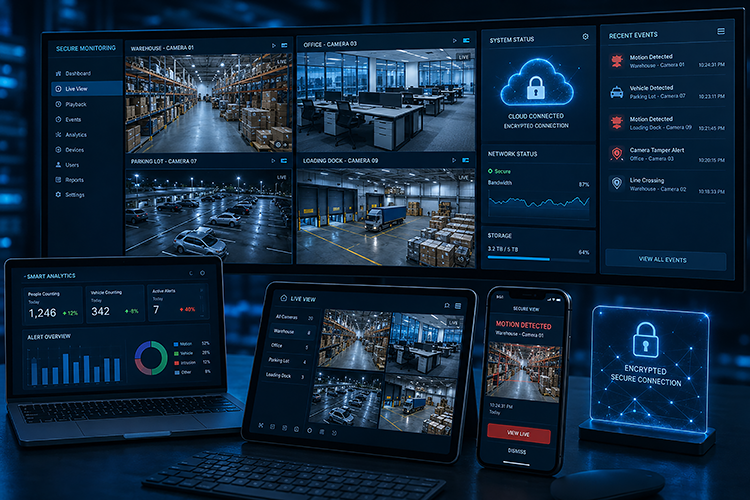
Remote CCTV monitoring is the ability to view, manage, and respond to live camera footage from a location other than the property itself. Through a secure internet connection, authorized users can pull up camera feeds on a smartphone, tablet, or desktop at any time of day or night.
This goes beyond simply installing cameras. It creates a live, connected window into your business that stays open regardless of where you are. For South Florida business owners managing retail stores, medical offices, warehouses, or multi-tenant properties, this level of access is a practical and powerful security upgrade.
How Does a Commercial Remote Video Surveillance System Work
Understanding the technology behind remote CCTV systems helps you make informed decisions about what your business actually needs. Here is how the core components work together.
IP Cameras Capture High-Definition Video
Modern commercial surveillance starts with IP (Internet Protocol) cameras. Unlike older analog systems, IP cameras convert video into digital data that can be transmitted over your network. This enables high-definition resolution (HD or 4K), wider coverage angles, and smart features like motion detection and facial recognition. IP-based camera systems are now the fastest-growing segment in the surveillance industry, driven by demand for remote access, advanced analytics, and cloud integration in commercial facilities.
Footage Is Stored Locally or in the Cloud
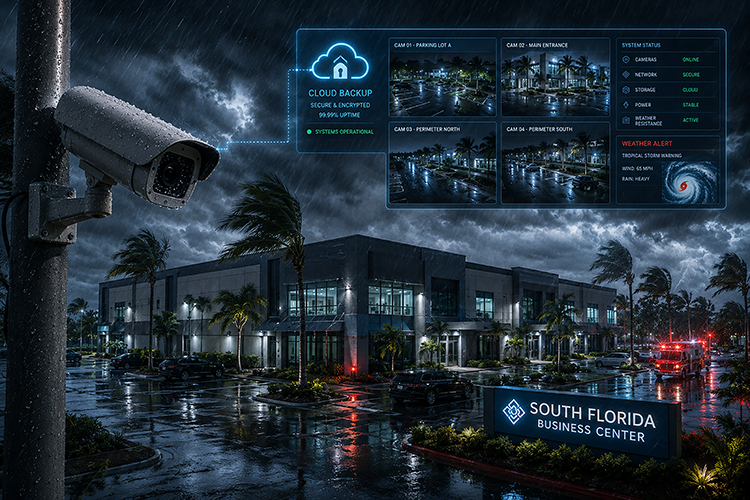
Recorded video is saved either on a Network Video Recorder (NVR) installed on-site or through a cloud-based storage platform. Many businesses use a hybrid approach: local NVR for fast access and cloud backup for off-site redundancy. Cloud storage is especially valuable for South Florida businesses facing hurricane season, since footage remains accessible even if physical hardware is damaged.
Secure Remote Access Through Apps or Web Portals
Once the system is connected to your network, you access it remotely through a dedicated app or secure web portal. Encryption protocols protect the video stream and prevent unauthorized access. You can view live feeds, rewind recorded footage, download clips, and adjust camera settings from virtually anywhere.
Smart Alerts Notify You Instantly
Remote monitoring systems can be configured to send push notifications or email alerts the moment motion is detected, a door is opened after hours, or an unusual event triggers a camera. This means you do not need to watch footage constantly; the system flags what matters and brings it to your attention.
What Features Should Businesses Expect From a Remote CCTV System
Not every surveillance system is built the same. When evaluating options for your commercial property, here are the key features worth looking for:
- High-definition video quality: HD or 4K resolution ensures faces, license plates, and specific details are captured clearly enough to be useful in investigations or legal proceedings.
- Infrared night vision: South Florida businesses that operate early mornings or late evenings need cameras that perform reliably in low-light and no-light conditions.
- Motion-activated recording: Systems that record only on detected motion reduce storage use while ensuring important events are never missed.
- Pan-tilt-zoom (PTZ) cameras: For large open areas like parking lots, warehouses, or loading docks, PTZ cameras allow remote repositioning to follow activity across a wide space.
- Multi-camera management: A quality system lets you monitor all camera feeds from a single dashboard, rather than toggling between separate apps.
- User access levels: You should be able to grant different levels of camera access to managers, security staff, or shift supervisors without sharing full administrative control.
- Scalability: As your business grows or expands to new locations, your camera system should be easy to expand without replacing existing hardware.
Why Does Professional CCTV Installation Matter
Many business owners assume that placing cameras in obvious spots is enough. In practice, camera placement and system configuration are as important as the hardware itself.
A poorly placed camera misses critical angles, creates blind spots, and produces footage that is too dark, too wide, or poorly framed to be useful. Professional installation eliminates these issues by combining site assessment, camera specification, and strategic positioning.
Site Assessment and Coverage Mapping
A professional installer evaluates your property’s layout, entry points, high-risk zones, lighting conditions, and existing infrastructure before recommending a camera configuration. This results in a system that covers what matters, rather than what happens to be convenient.
Network Configuration and Cybersecurity
Remote CCTV systems depend on your network, and a misconfigured system is a cybersecurity liability. Professional installers ensure your cameras are on a secure, segmented network, with encrypted transmission and password-protected access controls. This protects your footage from unauthorized access and reduces your exposure to network intrusions.
Integration With Alarms and Access Control
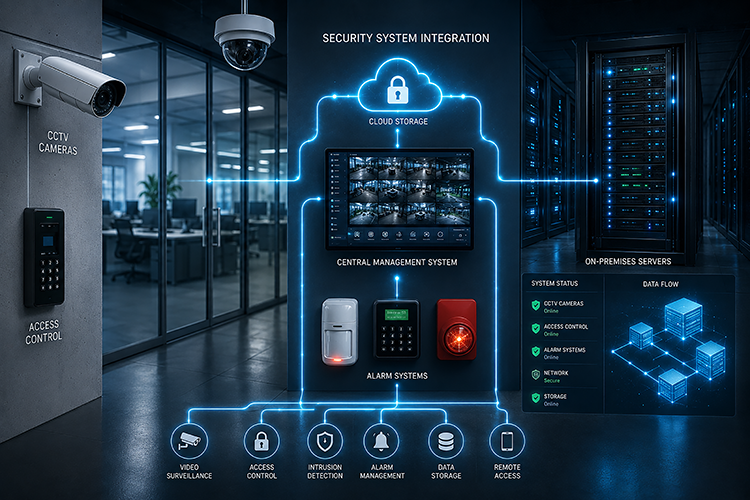
One of the most significant advantages of professional installation is system integration. When your CCTV system is linked to your access control or intrusion alarm, cameras can automatically begin recording the moment a door is forced open or an alarm zone is triggered. This creates a complete, correlated record of security events.
Group One Safety and Security in Stuart, FL builds surveillance solutions that connect seamlessly with access control systems and commercial alarm monitoring, giving businesses a unified security infrastructure rather than a collection of disconnected tools.
What Are the Benefits of Remote Surveillance for South Florida Businesses
South Florida presents specific security considerations that make remote CCTV monitoring particularly worthwhile. The region’s combination of high commercial activity, tourism traffic, dense retail corridors, and seasonal fluctuations in both population and crime patterns creates a dynamic environment where consistent visibility matters.
Here is what businesses in the area gain from a professionally designed remote surveillance system:
- Year-round coverage during storm season: Cloud-backed footage and remote access remain available even when you cannot physically access your property due to weather or evacuation.
- Deterrence through visible camera presence: Professionally installed cameras with proper signage reduce the likelihood of theft, vandalism, and unauthorized entry before an incident ever occurs.
- Lower insurance premiums: Many commercial insurers offer reduced rates for businesses with verified, professionally installed surveillance systems in place.
- Employee accountability and workplace safety: Camera coverage of workspaces, storage areas, and loading zones supports both safety compliance and internal accountability without creating an adversarial environment.
- Multi-site management from one platform: For businesses with multiple South Florida locations, a centralized remote monitoring system allows all properties to be managed from a single dashboard.
Final Takeaways
- Remote CCTV monitoring gives South Florida business owners live visibility into their properties from any device, at any time, from anywhere.
- IP cameras, encrypted remote access, and smart alert systems work together to create a proactive security layer that goes far beyond traditional recorded surveillance.
- Professional installation is essential for correct camera placement, network security, and meaningful integration with alarms and access control systems.
- Cloud and NVR storage options protect your footage even during South Florida’s unpredictable hurricane season and severe weather events.
- Quick incident response, documented video evidence, and continuous deterrence make remote CCTV monitoring one of the highest-value investments a commercial property owner can make.
When your business needs surveillance coverage that works around the clock, across every corner of your property, and from wherever you happen to be, Group One Safety and Security is the South Florida team built to deliver it.
Group One Safety and Security serves commercial and residential clients throughout South Florida from our Stuart, FL headquarters. Learn more about our commercial CCTV and video surveillance solutions or call us.
Frequently Asked Questions
What is the difference between remote CCTV monitoring and standard security cameras?
Standard security cameras record footage that is stored and reviewed after the fact. Remote CCTV monitoring goes further by enabling live viewing, real-time alerts, and immediate response from any internet-connected device. It transforms passive recording into an active, responsive security tool.
Can I access my business cameras from my phone while traveling?
Yes. Remote CCTV systems are designed for exactly this purpose. Once your system is configured and connected, you can view live and recorded footage through a secure mobile app from anywhere with an internet connection. You can also receive real-time alerts and share access with trusted staff members at different permission levels.
How many cameras does my business need for effective remote monitoring?
The number of cameras depends on your property’s size, layout, and risk areas. A professional site assessment is the most reliable way to determine the right configuration. A small retail store may need four to eight cameras, while a warehouse or multi-building property may require significantly more for complete coverage.
Is remote CCTV monitoring suitable for small businesses, or only large enterprises?
It is well-suited for businesses of all sizes. Scalable IP camera systems allow small businesses to start with a modest setup and expand as needed. The cost of a properly installed system is often offset by reduced theft losses, lower insurance costs, and the peace of mind that comes with 24/7 visibility.