How Do Fire Alarm and Sprinkler Systems Work Together in Stuart and South Florida Commercial Properties?
Key Takeaways
- Fire alarm sprinkler systems are two distinct systems that must be integrated to function as a complete, code-compliant fire protection solution in most commercial buildings.
- Water flow switches connect your sprinkler system to the fire alarm panel, triggering alerts and emergency dispatch the moment a sprinkler head activates.
- Tamper switches send supervisory signals to the alarm panel when a control valve moves from its normal open position, warning building personnel before a fire ever starts.
- Florida’s 8th Edition Fire Prevention Code (currently in effect) requires both systems to be designed, installed, and inspected under NFPA 72, NFPA 13, and NFPA 25 standards.
- Running fire alarm and sprinkler systems as two separate, unconnected units puts your building out of compliance and leaves occupants without a coordinated life safety response.
- A licensed local contractor like Group One Safety and Security, with dual expertise in both fire alarm and fire sprinkler systems, is essential to get the design, integration, and documentation right the first time.
Why Does Your Commercial Building Need Both Systems
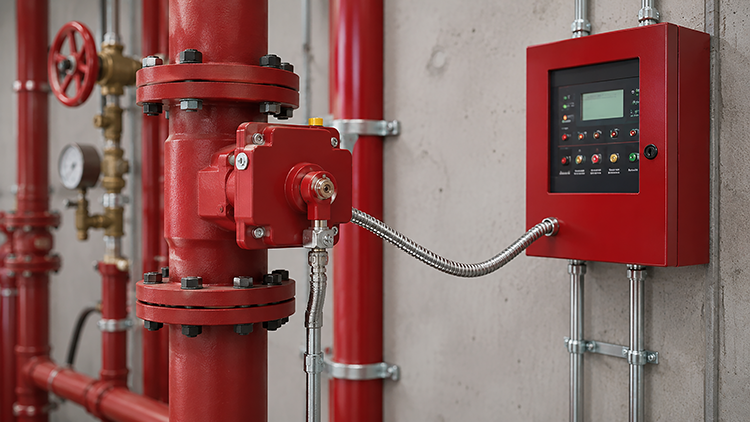
Many South Florida business owners assume that having a sprinkler system means they are fully covered for fire protection. Others assume that a fire alarm panel handles everything on its own. In reality, neither system is a standalone solution. Each one serves a specific purpose, and it is their connection to each other that creates a true life safety infrastructure.
A fire alarm system is designed to detect early signs of fire through smoke detectors, heat detectors, and manual pull stations, and then alert building occupants and dispatch emergency responders. A fire sprinkler system is designed to suppress active flames by releasing water directly over a heat source. On their own, each system only addresses part of the threat. Together, they create a coordinated response that simultaneously detects, alerts, suppresses, and notifies within seconds.
Florida law and local fire codes in the Treasure Coast and South Florida region reinforce this. Most new commercial buildings over 5,000 square feet, along with buildings three stories or more in height, are required to carry automatic sprinkler systems. Virtually all occupied commercial spaces are required to have a compliant fire alarm system. When both are present, the code requires them to be integrated and monitored together. Group One Safety and Security helps South Florida business owners navigate exactly this requirement, from initial design through final inspection.
How Does a Water Flow Switch Connect the Two Systems
The water flow switch is the critical link between a sprinkler system and a fire alarm panel. It is installed on the sprinkler system’s pipe riser and monitors the flow of water inside the pipe. When a sprinkler head activates in response to heat, water begins moving through the pipe. The flow switch detects that movement and sends an immediate signal to the fire alarm control panel.
Once the alarm panel receives that signal, it executes a series of automatic responses. These responses can include:
- Activating audible and visual notification devices throughout the building
- Transmitting a signal to the UL-listed central monitoring station
- Initiating emergency dispatch to the local fire department
- Triggering HVAC shutdowns to prevent smoke from spreading through ductwork
- Initiating elevator recall to return cars to the ground floor for safe egress
In buildings with multiple sprinkler zones or risers, a separate water flow switch is installed for each zone. This zoning arrangement allows the fire alarm panel to identify precisely which area of the building has activated, giving the fire department faster and more accurate information when they arrive on scene.
Without this integration, a sprinkler head could activate and suppress a fire with no audible alert to occupants and no automatic notification to emergency services. That scenario is not code-compliant, and more importantly, it is dangerous. Group One Safety and Security designs every commercial fire alarm system with proper water flow switch integration built in from the start.
What Is Tamper Monitoring and Why Does It Matter
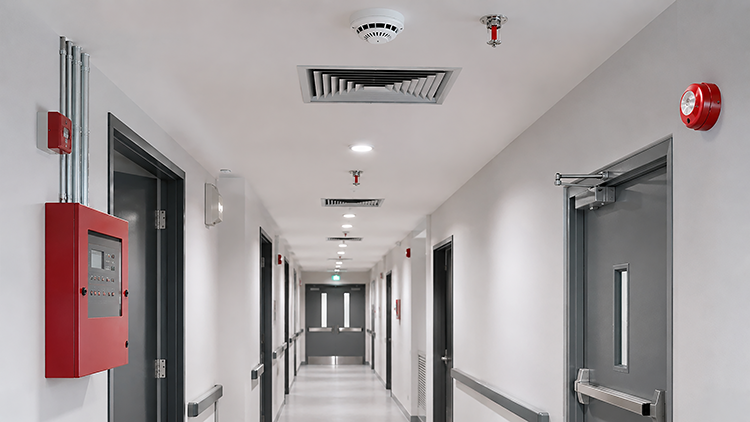
Tamper monitoring is a supervisory function that addresses one of the most common and preventable causes of sprinkler failure: a control valve that has been closed or partially closed, cutting off the water supply to the system.
A tamper switch is installed on the control valve that governs water flow to the sprinkler system. If the valve moves from its normal open position, even by a small amount, the tamper switch detects the change and sends a supervisory signal to the fire alarm panel. This is not a fire alarm signal. It is a warning signal that tells building personnel the sprinkler system may be impaired and needs immediate attention.
This distinction matters because a supervisory signal allows facility managers to investigate and correct the issue before an emergency occurs. Research from the National Fire Protection Association has found that in cases where sprinkler systems failed to operate during a fire, the sprinkler system had been shut off in a significant portion of those incidents. Tamper monitoring exists precisely to prevent that outcome.
Under NFPA 72 and NFPA 13, backflow preventer valves in buildings equipped with fire alarm systems must be electrically supervised by a tamper switch and separately annunciated at the fire alarm panel. NFPA 25, which governs ongoing inspection and maintenance, requires tamper switches to be tested every six months.
A tamper switch test involves operating the control valve handwheel by a small number of revolutions and confirming that the panel receives and displays the supervisory signal correctly. Group One Safety and Security performs these tests as part of our scheduled inspection and maintenance program for commercial properties throughout Stuart and South Florida.
What Actually Happens in a Real Fire Event
Understanding the step-by-step sequence during an actual fire helps illustrate why integration is so critical. Here is how a properly connected system, designed and installed by Group One Safety and Security, responds in a South Florida commercial building:
Step 1: Initial Detection
A smoke detector or heat detector on the fire alarm panel detects abnormal conditions and initiates an alarm signal. The panel activates horns, strobes, and visual notification devices throughout the building. Occupants begin evacuation.
Step 2: Signal Transmission
The alarm panel simultaneously transmits a signal to the UL-listed central monitoring station, which contacts the local fire department and dispatches emergency responders. Group One Safety and Security connects every system we install to UL-listed 24/7 monitoring for this exact purpose.
Step 3: Sprinkler Activation
As temperatures rise at the ceiling level, the fusible link or glass bulb inside the nearest sprinkler head reaches its activation threshold, typically between 135 and 165 degrees Fahrenheit for standard commercial heads. The head opens and releases water directly over the fire source.
Step 4: Water Flow Switch Activation
The water flow switch on the riser pipe detects the water movement and sends its own signal to the alarm panel. The panel logs which zone has activated, providing additional location data for responding units.
Step 5: Integrated System Actions
Depending on how the system has been programmed, the alarm panel may simultaneously shut down HVAC units in the affected zone, recall elevators, release electromagnetic door holders to close fire doors, and begin any voice evacuation or mass notification sequences required for the occupancy type.
Step 6: Emergency Response
Fire department personnel arrive with the benefit of alarm annunciator information and water flow zone data, allowing them to move directly to the affected area rather than conducting a full building search.
Each step in this sequence depends on the previous one functioning correctly. A gap in integration at any point can slow or break the chain of response.
What Are the Code Requirements in Florida
Florida commercial properties are currently governed by the 8th Edition Florida Fire Prevention Code, which became effective on December 31, 2023, and remains in full force in 2026. This edition references updated NFPA standards, including NFPA 72 for fire alarm systems and
NFPA 101 for life safety, which together define how fire alarm and sprinkler systems must be designed, integrated, and monitored.
Key requirements that affect South Florida commercial buildings include:
- NFPA 72 compliance for the design, installation, and testing of fire alarm systems, including monitoring of water flow and tamper devices
- NFPA 13 compliance for the installation of automatic sprinkler systems, including valve supervision and waterflow alarms
- NFPA 25 compliance for ongoing inspection, testing, and maintenance of water-based fire protection systems, including quarterly testing of waterflow alarm devices and semi-annual testing of tamper switches
- UL-listed monitoring requirements, with alarm and supervisory signals transmitted to an approved central station, remote supervising station, or proprietary supervising station
- AHJ (Authority Having Jurisdiction) approval for system designs, which in Martin County and surrounding Treasure Coast communities means your contractor must work directly with local fire marshals and permitting offices
Local jurisdictions, including those in Miami-Dade and Broward counties further south, are permitted to adopt additional amendments beyond the state code. That means the requirements for a property in Stuart may differ from those in Fort Lauderdale or Miami, and a contractor who does not know local code nuances will create problems during inspection.
Group One Safety and Security has been serving South Florida commercial properties since 1984, with the local code knowledge to get both systems designed and documented correctly for each jurisdiction.
Florida’s permit timeline requirements are also worth noting. Under House Bill 551, fire alarm and fire sprinkler system permits must be issued within two business days, with inspections scheduled within three business days of a request. This tight window puts additional pressure on contractors to submit complete, accurate documentation from the start.
Why Should Both Systems Be Handled by One Licensed Contractor
One of the most significant decisions a South Florida business owner will make during a commercial construction, renovation, or system upgrade is whether to use a single integrated contractor or separate vendors for fire alarms and fire sprinklers. At Group One Safety and Security, we hold both fire alarm and fire sprinkler licenses, which is precisely why our clients avoid the coordination problems that arise when two separate vendors try to make their systems work together. The International Fire Code (IFC) Section 903.4, referenced by Florida code, requires that valves controlling water supply for automatic sprinkler systems be supervised by a listed fire alarm control unit, meaning the two systems must be treated as one scope of compliance, not two separate scopes.
Using separate contractors for each system creates a coordination gap. The fire alarm contractor designs a system based on assumed sprinkler locations. The sprinkler contractor installs heads based on a layout that may not perfectly align with the alarm design. When the two teams complete their work and it is time to integrate, device locations, signal wiring, zone assignments, and panel programming may not align. Fixing those conflicts after the fact is expensive, time-consuming, and sometimes requires redesigning portions of either system.
A single licensed contractor who holds both fire alarm and fire sprinkler licenses can manage design, installation, integration, and inspection under one scope of work. This means:
- The alarm panel and sprinkler risers are designed together from the start
- Water flow switch wiring and tamper monitoring points are coordinated with the alarm layout
- Zone assignments match across both systems
- Inspection documentation covers both systems under one report
- A single point of contact is responsible for code compliance across the entire life safety system
This integrated approach is not only more efficient. It is also more defensible during AHJ inspections and more reliable in an actual emergency. When Group One Safety and Security manages both systems, there is one team, one design, and one accountability standard.
Final Takeaways
- Fire alarm and sprinkler systems depend on each other. The water flow switch and tamper switch are the physical connections that allow both systems to communicate and respond as a unified life safety solution.
- Code compliance in Florida requires not only that both systems exist, but that they are integrated, monitored, tested, and documented on a defined schedule under NFPA 72, NFPA 13, and NFPA 25.
- A single licensed contractor like Group One Safety and Security managing both systems eliminates coordination gaps, reduces compliance risk, and creates cleaner inspection documentation for AHJ review.
- Businesses in Stuart and across the Treasure Coast should not treat fire alarm and sprinkler systems as separate line items managed by separate vendors. They are one system that must perform as one system when it matters most.
When you are ready to design, upgrade, or inspect your integrated fire protection system, Group One Safety and Security brings the licensed expertise, local knowledge, and unified service approach that South Florida commercial properties need to stay protected, compliant, and operational.
FAQs: Fire Alarm and Sprinkler System Integration
Do fire alarm systems automatically trigger sprinklers when smoke is detected?
In most standard commercial systems, smoke detection alone does not trigger sprinkler activation. Sprinkler heads activate independently based on heat at their individual location. The alarm and the sprinkler system communicate through the water flow switch after the sprinkler activates. There are specialized system types, such as pre-action systems used in data centers or archives, where alarm detection can be programmed to prepare the sprinkler system for activation, but these require specific design intent and AHJ approval.
What is the difference between a supervisory signal and an alarm signal in an integrated system?
An alarm signal indicates that a fire or smoke condition has been detected and requires immediate evacuation and emergency response. A supervisory signal indicates that a component of the fire protection system is in an abnormal condition, such as a closed control valve detected by a tamper switch, but does not necessarily mean a fire has occurred. Both signal types must be transmitted to the monitoring station under NFPA 72, but they trigger different response protocols.
Who is responsible for ensuring the integrated system is inspected on schedule?
The building owner or property manager is ultimately responsible for maintaining a compliant fire protection system. Florida law places the compliance burden on the property, not solely on the contractor. This means building owners need a reliable service partner who proactively schedules inspections, provides complete documentation, and keeps both the fire alarm and sprinkler systems current with applicable code requirements. Group One Safety and Security serves as that long-term compliance partner for commercial properties throughout Stuart and South Florida.